China's August Crude Stainless Output Hits 3.66 Million Tonnes: What October Cuts Mean for Buyers
Quick Summary
China produced 3.66 million tonnes of crude stainless steel in August 2026, as Yieh Phua reported on 2 October. September demand fell short of expectations, so mills are expected to trim output in October, though no cut is confirmed.
China produced 3.66 million tonnes of crude stainless steel in August 2026, as Yieh Phua reported on 2 October. September demand fell short of expectations, so mills are expected to trim output in October, though no cut is confirmed. Expected cuts give spot quotes a cost floor; weak demand caps the upside: lock price selectively rather than chase.
What the August figure actually shows
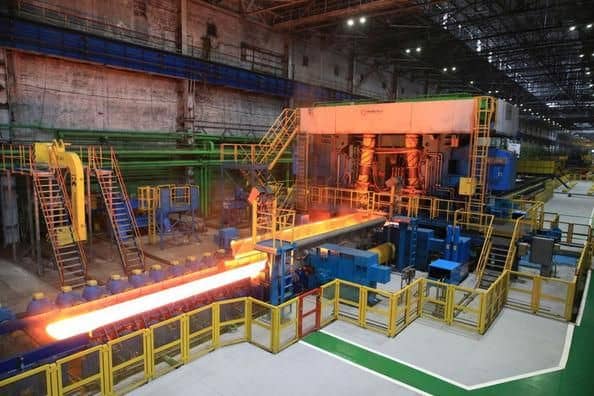
China's 3.66 million tonnes of crude stainless steel in August 2026, reported by Yieh Phua on 2 October 2026, is the number to plan against this autumn. "Crude" means melted steel before it becomes coil, plate or pipe, so the figure measures how much capacity actually ran rather than how much finished material is sitting in warehouses. August melting followed the summer maintenance cycle we traced in our note on China's July output and August maintenance.
The figure matters because of what happened next. September, the month the trade calls Golden September, did not absorb that volume — demand came in below expectations, and the conversation has shifted from how much was produced to how much might be withheld in October.
Input costs: where the floor comes from
Three purchased inputs set the marginal cost of a tonne of 300-series melt, and the latest assessments show them soft to flat rather than rising.
| Input | Latest reference | Move | Basis |
|---|---|---|---|
| Indonesian high-grade NPI (10–12%) | 1,048 yuan per nickel point | −3 yuan | nickel unit cost |
| High-carbon ferrochromium (Inner Mongolia) | 7,750–7,900 yuan/t | −25 yuan/t | week on week |
| 304 stainless scrap, turnings (East China) | 9,700–9,800 yuan/t | unchanged | domestic scrap |
Two melting routes complete the picture:
| Route | Fully-loaded cost |
|---|---|
| Pure scrap route | about 13,763 yuan/t |
| Pure NPI route | about 14,187 yuan/t |
Read together, the three raw materials are drifting sideways to marginally lower while full process cost still sits in the 13,763–14,187 yuan/t band shown above. That range is the floor under any October offer: a mill selling well below replacement cost today is only deferring the loss, and a quote far under the pure NPI route is usually built on stock bought earlier. A supplier that states the input basis behind each figure, as Yuze Metal does in its quotations, gives an import buyer something concrete to reconcile against.
Cost behaviour also differs by product. Higher-alloy grades such as 316 stainless steel hot rolled coil carry their own nickel and molybdenum logic and should not be assumed to follow 304, while buyers on 200-series specifications, 201 stainless steel cold rolled coil in particular, have smaller nickel exposure but face the same margin picture: soft inputs are not turning into aggressive offers.
Two profit readings, two different messages
SMM published two margin figures on 24 September 2026, and the distance between them is the most useful signal in this market. Valued on a mill-inventory-cost basis, the margin was −1.98%. Valued on a spot-sale-price basis, the same mills showed +1.24%.
What differs is the cost you use. Price raw material at what a mill would pay to restock today and every tonne sold loses money; price the same material at the value of what the mill already holds and a small profit appears. Producers that melted on cheaper, earlier inventory can still ship at a margin, while fresh tonnage booked at current input prices does not clear.
The practical reading for procurement is that nobody is comfortable. Producers have little room to cut prices to win volume, yet they cannot push quotes higher into demand that has already disappointed. It is a market that drifts rather than breaks, which makes timing more valuable than forecasting.
What an October cut would change
No production cut has been announced. What exists is an expectation — building since the September demand miss — that mills will take capacity down in October, and expectations move prices before physical tonnage does.
Three consequences are worth planning for:
- Less spot tonnage available on the date your order lands, which tightens the offer side even if consumption is flat.
- Quotes that stop drifting down, because the cost basis above supports them from below.
- A price-lock window that opens and closes with the announcements themselves: the earlier mills confirm reductions, the less time buyers have to wait for a lower print.
The asymmetry is the whole trade. Downside is buffered by cost, upside is capped by demand, and the timing of any lock depends on how quickly expectation becomes schedule.
Work with Yuze Metal
Yuze Metal Limited was founded in 2012 in Wuxi, China, and exports stainless steel and aluminium products to more than 60 countries, supplying over 300,000 tonnes a year with an MTC accompanying every batch. On a market as unsettled as this one, every quotation we issue states the nickel and chromium raw-material benchmark it is built on and how long it stays valid, so your team can reconcile each price against the series it references.
Write to us at sales@yuzemetal.com or message us on WhatsApp; we reply fast.
Four things to do with October quotes
- Fix the validity window on every offer. Ask for 10–15 days rather than open-ended pricing, so a quote cannot be quietly withdrawn while you compare.
- Split the order into tranches. Book a first tranche at current levels and hold a second tranche for confirmation of mill cutbacks; do not commit the whole volume to one date.
- Ask for the benchmark behind the number. Request the nickel and chromium basis used in the calculation and the date it was struck, then check it against published assessments.
- Watch announcements, not commentary. Track mill-level output decisions weekly; a confirmed schedule changes your window, an opinion piece does not.